
Computing
Man is still the most extraordinary computer of all.
John F Kennedy
Our Intent
Our carefully balanced computing curriculum is designed to help children to enjoy computing and develop an appreciation of the ways in which technology helps us to create, manage, organise and collaborate. Pupils flourish in this subject by:
- Becoming digitally competent and able to transfer the skills they learn into their day to day lives now and in the future
- Equipping children for life in the digital world, including developing their understanding of appropriate online behaviour and copyright issues so that they become discerning consumers of online information
- Promoting understanding in three key areas: computer science, information technology and digital literacy
Implementation
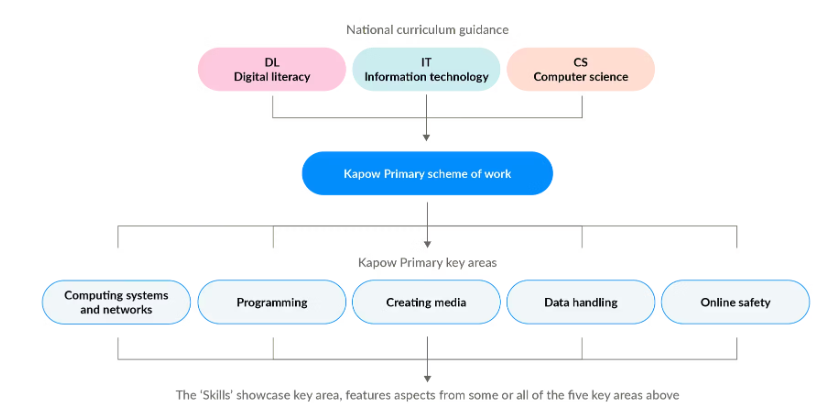
Computing is taught using the Kapow scheme of work based on the 2014 National Curriculum with specific units chosen to match the needs of our pupils. The intention is for our pupils to become curious and explorative thinkers with a diverse knowledge of the world.
The National curriculum organises the attainment targets for Computing under three strands:
- Computer science.
- Information technology.
- Digital literacy.
Kapow Primary’s Computing curriculum has been structured to ensure these strands run through each unit.
These strands ensure a balanced coverage of the different aspects of Computing, supporting the development of both substantive knowledge (e.g understanding networks, algorithms and data) and disciplinary knowledge (e.g. applying skills to programming, creating digital content and evaluating online information responsibly).
Impact
The impact of the Computing curriculum will be evident through pupils:
- Digital competence and application of transferable skills.
- Readiness for life in the digital world, where they exhibit their understanding of appropriate online behaviour and copyright issues as discerning consumers of online information.
- Strong understanding of computer science, information technology and digital literacy.
- Pupils’ readiness for their future learning.
